
The Great Nostalgia Pivot
Why brands are going lo-fi, going 4:3 and suddenly sound like your childhood again.
By Nadia Khabbaz, Brand Strategist & Creative Director
Published Feb. 18, 2026
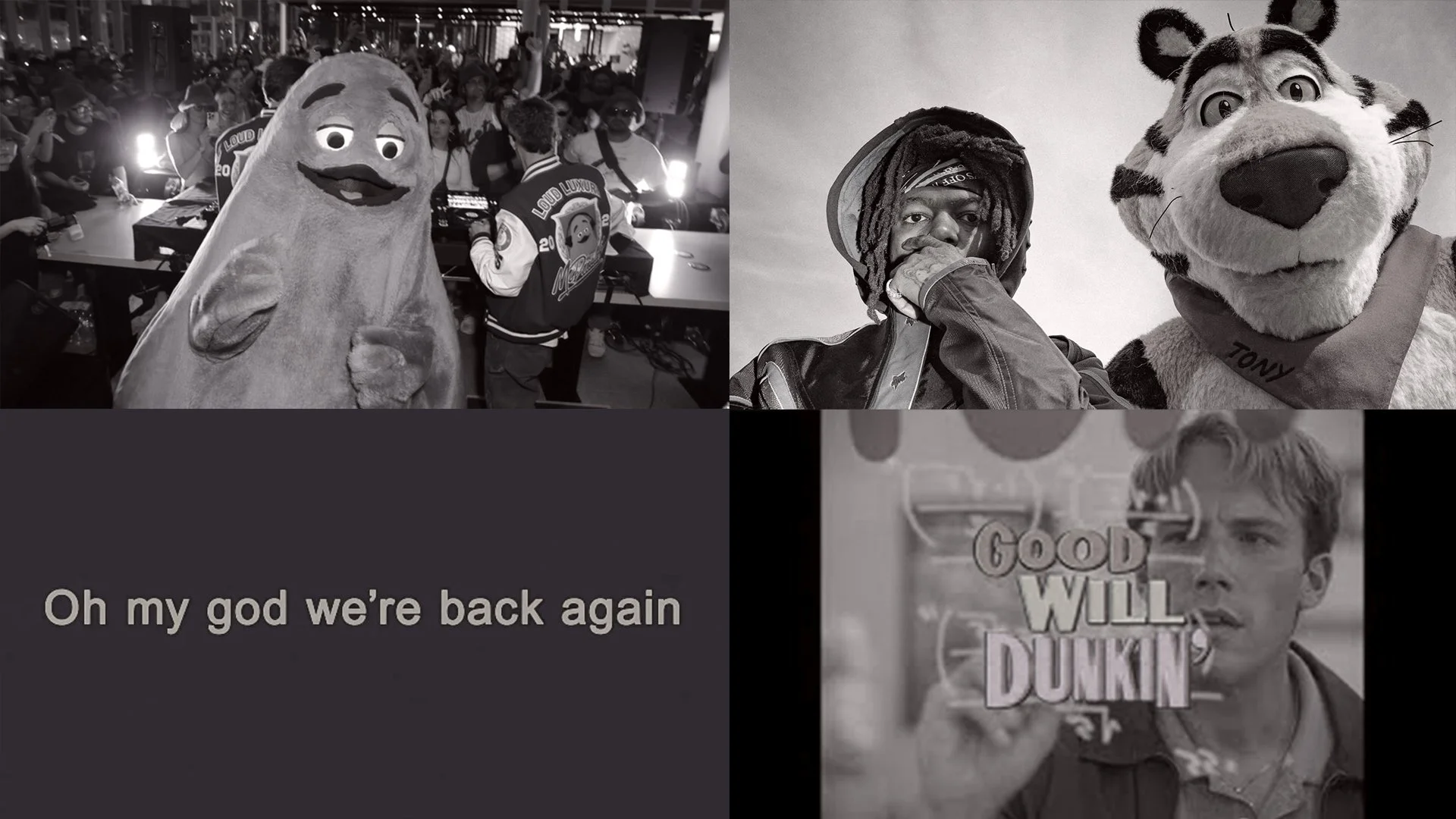
The vibe shift is real.
This Super Bowl season alone, you could feel brands collectively reaching into a dusty plastic CD wallet and saying: “What if we just… stopped trying so hard?”
Coinbase ran a Big Game spot built like an early 00s karaoke lyric video, complete with PowerPoint-y transitions and throwback energy. Frosted Flakes is remixing its “Hey Tony” era jingle while re-centering Tony the Tiger, pulling a legacy asset out of the cultural attic and making it current again. McDonald’s brought back Grimace and wrapped it in childhood birthday-party nostalgia, right down to the emotional comfort-food framing.
And it’s not only campaigns. It’s execution culture.
We are watching a broader migration away from hyper-polished, pristine, perfectly lit “this is an ad” advertising. Toward intentionally imperfect content that looks like it was made by a human with a camera roll, a sense of humor and maybe a slightly sticky laptop.
So the question is not “why nostalgia?”
It’s “why nostalgia right now?”
Because trust is fragile and nostalgia is a shortcut to safety
When the cultural climate feels unstable, people don’t sprint toward “the future.” They retreat into things that feel familiar, warm and proven.
Nostalgia is basically a trust hack. It borrows emotional equity from the past.
A mascot you already know.
A jingle you can sing without thinking.
A visual texture your brain recognizes as “simpler times,” even if those times were also chaotic and you were just too young to pay taxes.
Nostalgia doesn’t require belief. It requires recognition.
Because people are exhausted by performed perfection
Perfect lighting. Perfect kitchen. Perfect product shot. Perfect smile.
It reads like a brand trying to pass a vibe check with a laminated checklist.
Lo-fi execution is the backlash. It signals:
• we’re not pretending this is your real life
• we’re not pretending we’re your best friend
• we’re in on the joke that this is marketing
Because Gen Z is nostalgic too
This is the twist people miss. Nostalgia is not only for millennials longing for 2004. Gen Z is actively participating in nostalgia culture, including for eras they barely lived through.
So when brands reference early internet aesthetics, Y2K design language, SD video textures and messy real life, they’re speaking a visual dialect that’s already circulating on TikTok, Pinterest and fashion cycles.
Because retro also reads as more human in the age of AI
As AI content floods the zone, hyper-clean, hyper-slick and hyper-perfect creative is starting to feel less premium and more synthetic.
Lo-fi is a human signal. So is nostalgia.
They both communicate: “a person made this,” or at least “a person cared enough to make it feel like a person made it.”
And right now, humanity is a differentiator.
What’s actually happening: nostalgia is becoming the format
This is bigger than “remember this character?” marketing.
Brands are adopting nostalgia as an execution system:
• 4:3 ratios
• SD textures and compression artifacts
• early 00s motion language like hard cuts, basic transitions and WordArt energy
• found footage vibes
• lived-in sets like messy countertops, imperfect lighting and real clutter
• sound cues that are more memory than music
It’s both what brands say and how they look while saying it.
The strategic why, in one line
Nostalgia is the fastest way to feel real, safe and culturally fluent without begging for attention.
It’s anti-cringe insurance.
It’s trust borrowing.
It’s a shortcut to emotion.
And it performs.
Closing thought
We’re in a moment where people don’t want to be marketed to. They want to be understood.
Nostalgia, lo-fi aesthetics and lived-in art direction are more like symptoms. They’re what happens when audiences are tired, skeptical and craving something that feels familiar, human and unperformed.
So yes, brands are tapping into nostalgia.
But what they’re really tapping into is this: people miss feeling like they can trust what they’re looking at.
Disclaimer: All images featured in this article are used for visual reference only. I do not claim ownership of any image rights.