
XBOX WENT BACK TO GREEN AND BROKE THE INTERNET
Four months into the job, Asha Sharma is reading the room harder than any CEO in tech right now.
By Nadia Khabbaz, Brand Strategist & Creative Director
Published Jun. 08, 2026
When Phil Spencer stepped back and Asha Sharma stepped in, a lot of people shrugged. Another corporate leadership shuffle. Another round of "exciting new vision" press releases nobody would remember in six months.
Except this one hit different.
Because in under four months, Sharma has done something most brand leaders spend years trying to figure out and still get wrong: she actually listened. Not to analysts. Not to engagement metrics. Not to the guy in the meeting who keeps saying "but what about the synergies."
To players.
And the results are making the internet lose its mind in the best way.
What she actually did (and why each move matters)
Let's run through it because the list is genuinely impressive:
Killed Copilot in gaming.
Xbox had been rolling out an AI companion to the console experience. Sharma's first major public commitment was pulling it. "Our console players aren't excited about that experience in their console," she said, point blank. In a Microsoft company that Satya Nadella has explicitly positioned around Copilot being in everything, that is not a small call. That's a CEO saying I know my audience better than our internal roadmap does.
Brought back "Xbox" as the identity.
It was Microsoft Gaming. Now it's just Xbox. Because nobody was out here rallying behind "Microsoft Gaming." People love Xbox. They have memories attached to that name. The logo is back. The identity is back. The era of burying your best brand asset under a corporate umbrella is over.
Made Game Pass more affordable.
Dropped the highest tier by seven dollars. Because apparently someone noticed that people were cancelling subscriptions and it wasn't because they hated gaming.
Killed "This Is An Xbox."
If you don't remember this campaign, consider yourself lucky. The gist was: your phone is an Xbox. Your tablet is an Xbox. Your fridge is probably an Xbox. It was the brand equivalent of saying "we are for everyone" which actually means "we stand for nothing." Gone.
Xbox exclusive games are back.
Gears of War E-Day was announced for PS5. Not anymore. It's Xbox-only. This is a statement. It says: we believe in our platform enough to bet on it. Exclusives are the point. Xbox is done playing nice in a way that was slowly eroding its reason to exist.
Revealed Project Helix.
Next-gen. Coming. Xbox is not quietly sunsetting itself into a software-only background player. They're building.
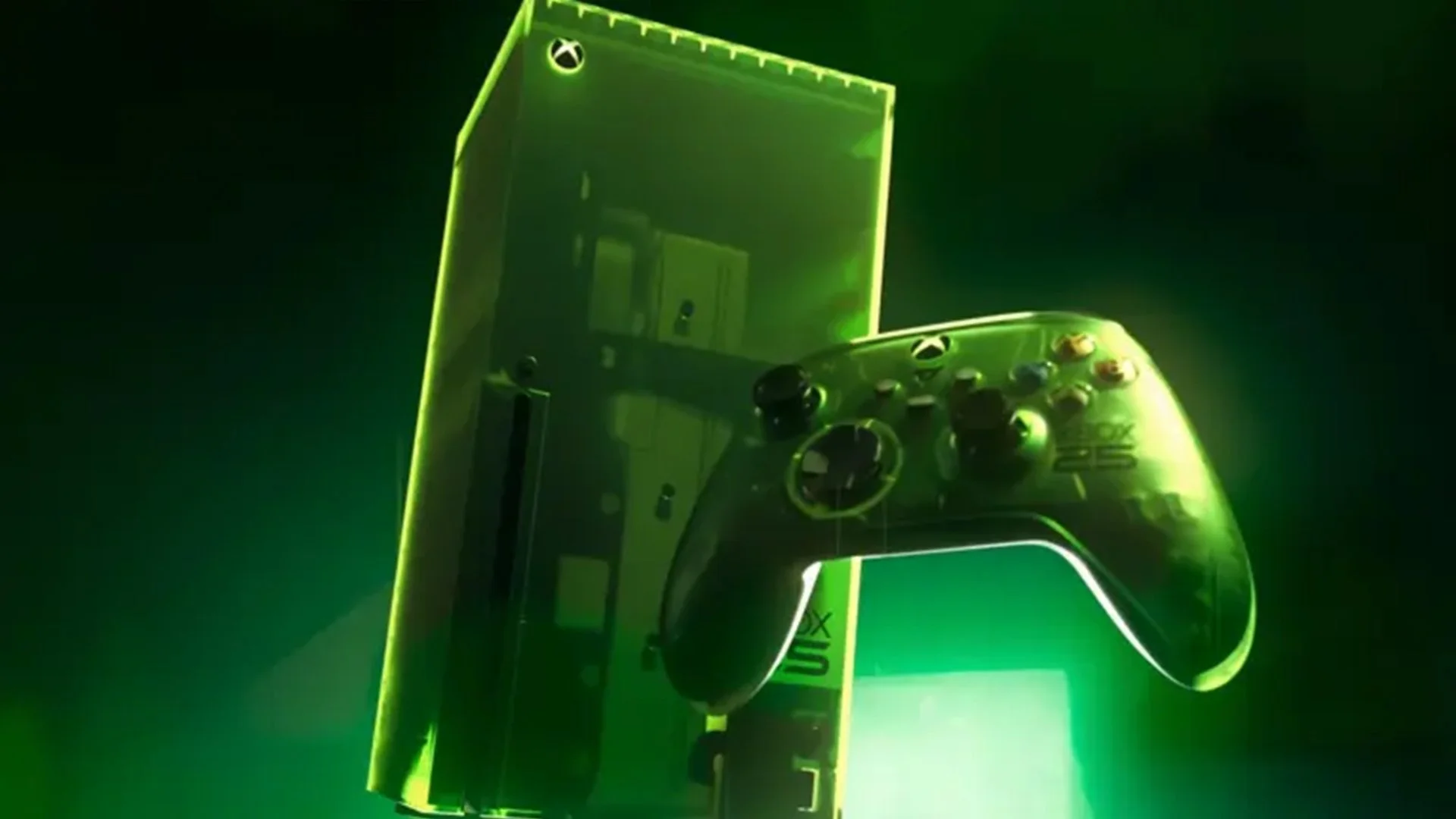
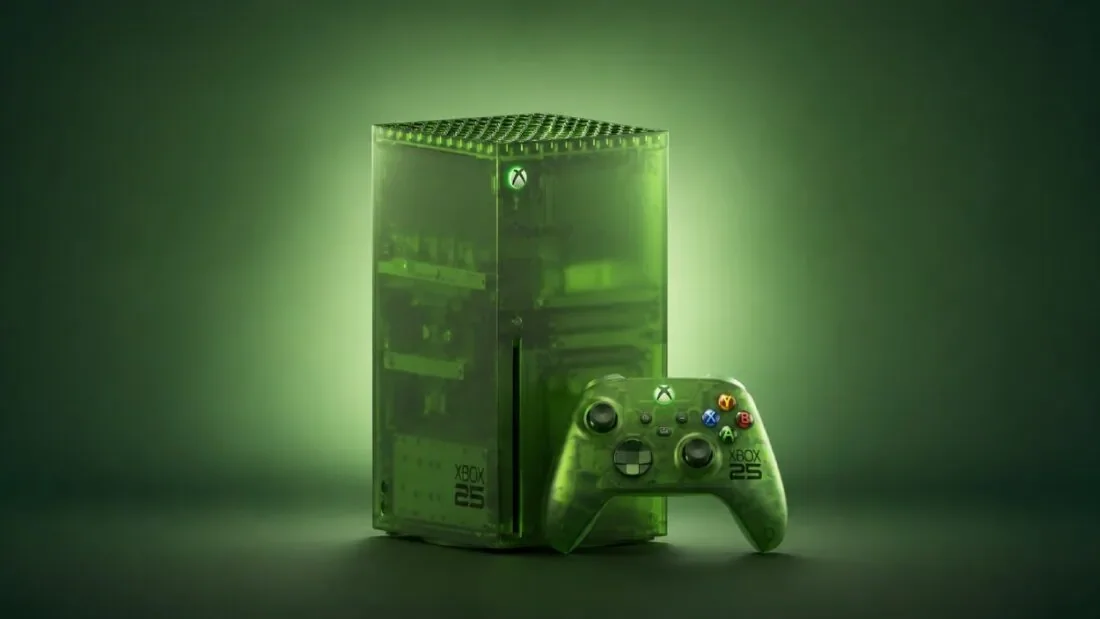
And then, the 25th anniversary limited edition console.
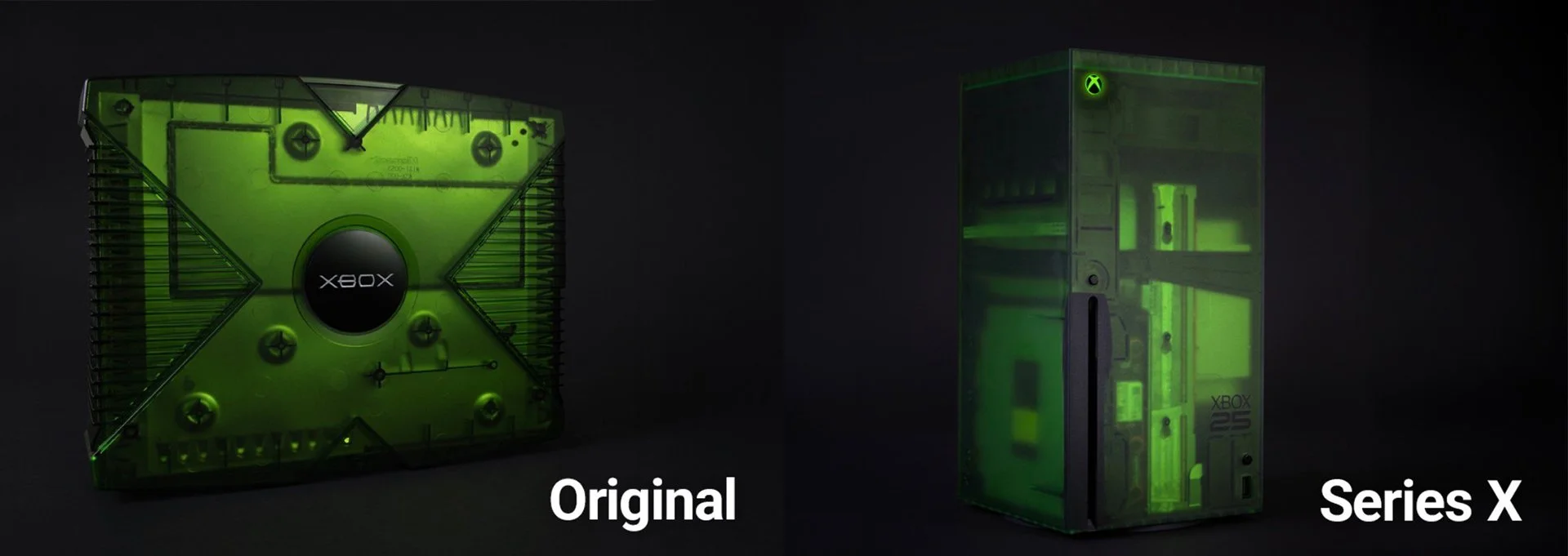
Translucent green. Inspired by the original 2001 Xbox. The thing that made people who were eight years old in 2001 physically gasp when they saw it on their feed.
That last one deserves its own section. Because it's a full case study in one product drop.
The launch video understood the assignment
I need to talk about how they announced this thing. Because the console alone would've been enough, but the launch video made it a moment.
It was punchy. It was loud. They used "Name of the Game" by The Crystal Method; a track so embedded in the original Xbox era that longtime fans know it as the Splinter Cell theme. That's not a music supervisor pulling from a "high energy" Spotify playlist. That's someone who actually played the games making a deliberate call to reach back into the exact emotional memory they wanted to activate. No ambient synth soundtrack. No slow product reveal with a voiceover about "the future of play." Just aggressive, unhinged hype in the best possible way, and a song choice that told the OGs: we remember too.
This matters strategically. Gaming culture has always had an edge to it. The whole identity of the medium, especially in the Xbox era, was built on irreverence. On being a little chaotic. On the kind of fun that isn't polished or family-friendly or trying to appeal to a board room. Somewhere in the Microsoft Gaming era, Xbox forgot that. The brand got corporate-sanitized. Safe. Beige, basically.
That launch video was Xbox remembering who it is. And the audience responded accordingly because it felt true. Not focus-grouped. Not optimized for broad appeal. Made for the people who actually show up.
The cultural read that makes all of this click
Here's what's happening in the broader landscape right now, and Sharma, whether she's consciously naming it or not, is executing against it perfectly.
Nostalgia is operating as a trust mechanism.
I know, I know… I've been on this soapbox for a while now. But the great nostalgia pivot keeps proving itself right and Xbox is the latest case study. It's a response to a world that feels unstable and oversaturated. When everything is uncertain, people reach for things that feel proven. A translucent green console that looks like 2001 is emotionally safe. It's I remember when this was good and this is that. Nostalgia doesn't require belief. It requires recognition.
Y2K is maturing into Frutiger Aero, and that's the specific moment we're in.
The aesthetic cycle has been moving fast. Y2K had its foundational moment, the glitchy fonts, the SD textures, the lo-fi execution. Frutiger Aero is the next chapter within that same lineage. The mid-2000s Windows Vista era. Glossy, bioluminescent, translucent. Soft glows, glass surfaces, organic shapes rendered in saturated greens and blues. That feeling of digital optimism before everything went flat and minimal and gray.
Look at that Xbox 25 console. It lands directly in that visual language. Translucent casing. The guts of the machine visible through green-tinted plastic. It could have shipped with a Vista wallpaper and nobody would've blinked. Xbox tapped OG nostalgia and landed on the exact aesthetic sub-moment the culture is moving into right now. Whether that was intentional or instinctual, the result is the same: culturally precise.
The minimalism era is over and people are relieved.
I'm going to say it. A decade of flat design, monochrome everything and "clean aesthetic" branding has left people starved for colour, texture and personality. We've been living in a world where every consumer product looked like it was designed by the same team of people who really loved negative space and hated fun. The pendulum has swung. Maximalism is back. Bold colours are back. Things that look like they were designed with actual enthusiasm are back.
The Xbox 25 console is green. Aggressively, unapologetically, translucent-circuit-board green. After years of matte black and matte white boxes sitting on shelves looking like expensive Bluetooth speakers with an identity crisis, this thing has character. It has a personality. It looks like something.
And honestly? As a gamer (and colour-lover), I had a physical reaction to seeing it. From the matte black PlayStation era to the all-white Series S era, consoles have been so aggressively boring to look at for so long that I'd kind of accepted it. Then this dropped and I remembered what it felt like to actually want a piece of hardware because it was cool, not just functional. That feeling is not a small thing. That's the exact emotional territory Sharma is playing in, and she is playing it correctly.
"Made by humans" is now a competitive advantage.
I've been saying this for months, and you’re probably tired of reading it, but Xbox just handed me yet another proof point. We are at the point where the fact that something was made by a real person with taste and intention is a differentiator. As AI-generated content floods creative industries, audiences have developed a detector for it. Not always consciously. But they feel when something has a pulse. Sharma's public commitment to human-made games, no AI slop, is a positioning decision that says: the thing you love was made by someone who gives a damn. In 2026, that is load-bearing.
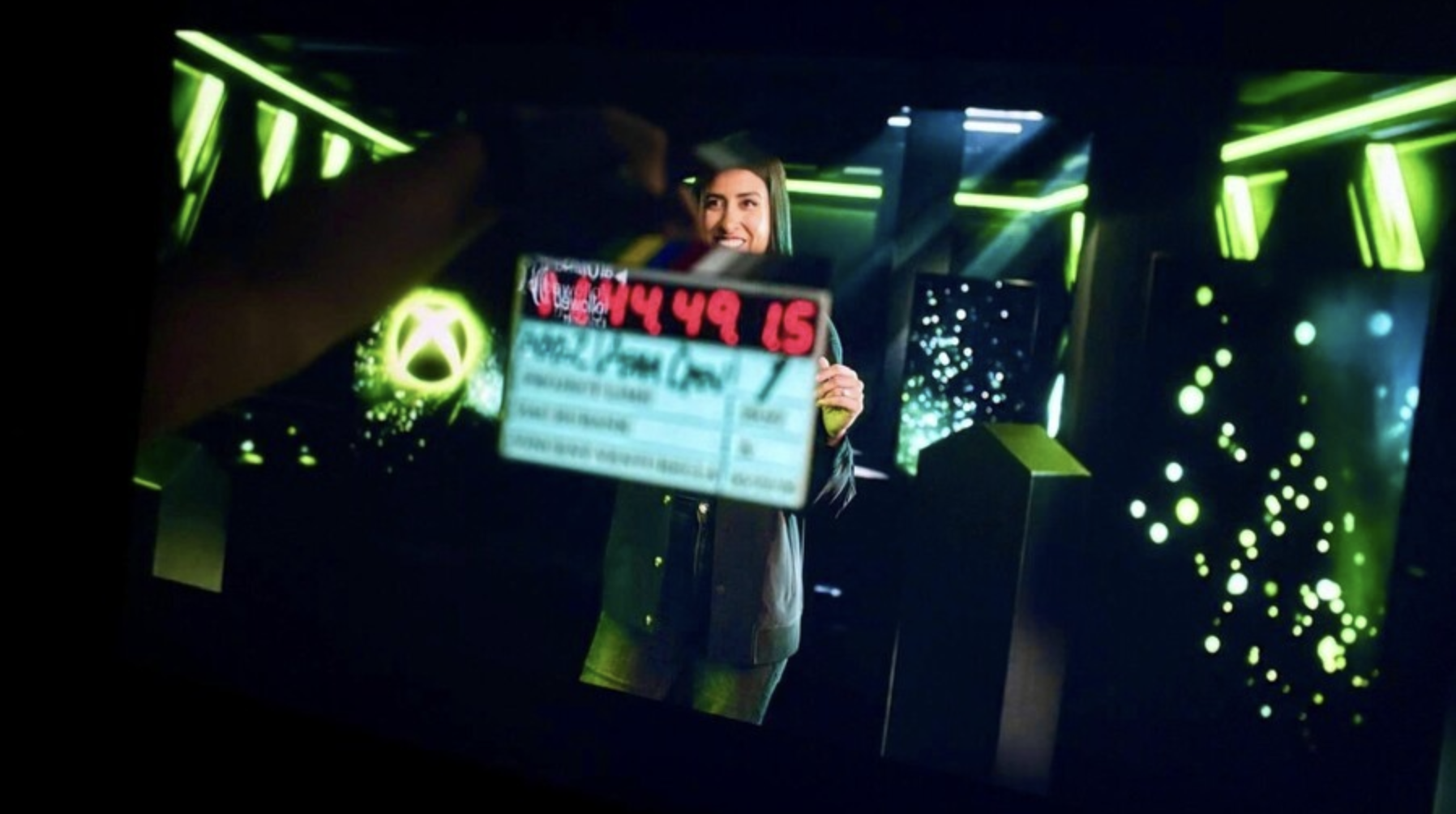
Image: Asha Sharma on Twitter/X
The Copilot call is the smartest thing she did
Removing Copilot from the console experience, inside a company built around pushing Copilot into everything, required understanding a distinction that most executives are still fumbling: where AI helps vs. where AI erases the point.
Gaming is not productivity. The "friction" in gaming is not a bug. The challenge, the exploration, the discovery… that's the product. An AI companion smoothing out your gaming experience isn't a feature. It's a total misread of what people are actually buying.
She said it herself: AI has a role in neural rendering. In upscaling. In reducing device footprint for better graphics. Under the hood, working on the craft, invisible to the experience. That's the mindful integration model. AI as infrastructure, not AI as personality.
What she killed was AI trying to be present in an experience where human presence was already the whole point. Players don't want a copilot. They want to be the main character.
Killing Copilot in a Copilot company also sends a signal to developers and to the culture: we are not going to AI-slop our way through the creative process to save money on headcount. We are investing in the people who make the games. In a moment where "made by humans" is becoming the new luxury label, and gamers have been some of the loudest about this particular hill, that commitment isn't just ethical. It's commercial strategy.
What the data says (for the skeptics)
The comment section on the Xbox 25 announcement basically wrote this article for me.
"Xbox is so back with new CEO." 40k likes. "Absolute cinema." 28k likes. "You guys are returning back to your roots. Xbox is resurrecting." 7k likes. "We love a brand that actually listens to what the people want."
That last one. That is the review. Brand equity rebuilt in real time, in the comments, for free, because the moves were right.
You cannot buy that. You cannot campaign your way to that. You earn it by making decisions that demonstrate you understand your audience better than your internal politics do.
Why this is a masterclass right now, specifically
Audiences are exhausted by performed innovation. By brands chasing the AI narrative because investors want to hear AI. By things that are technically impressive and emotionally bankrupt. By companies trying to be everything to everyone and ending up as nothing to nobody.
Sharma looked at a brand with a 25-year legacy, genuine cultural equity and a fanbase that was actively grieving what Xbox used to be, and she said: let's just be that again, but better. Honor what made it real. Build forward from there.
And that, my friends, is strategy.
The brands winning right now are the ones making people feel like someone inside that company actually cares whether or not they have a good time. Not in a "we ran a survey" way. In a "we made the call that served you even when it was politically complicated internally" way.
Sharma killed Copilot in gaming. In a Copilot company. She went back to the logo. She made the console green again. She gave the launch video rock music and attitude and zero corporate softness.
She bet on the culture that built Xbox in the first place.
And the culture said: finally.
Disclaimer: All images featured in this article are used for visual reference only. I do not claim ownership of any image rights.